Insights
Mall activations: turning footfall into participation
A mall does not sell products — it sells attention, dwell time and repeat visits. Here is everything we have built inside shopping centres, the QR layer that ties it together, and what we can deploy next.
Why a mall is not a store
A shop is judged on what it sells. A shopping centre is judged on how many people come, how long they stay, how often they come back and how much that traffic is worth to its tenants. That changes what an activation has to do: it must be worth stopping for as a visitor, and it must move footfall, dwell time and tenant spend for the centre.
So we design mall work as a participation system, not a stunt. Something happens in the atrium that people want to try, a mechanic connects it to the stores around it, and everything leaves a measurable trace.
What we have built in malls
Fifteen years of activations inside shopping centres — from gesture-controlled fitting rooms to a dinosaur that toured the country.
Sun Plaza — the virtual dressing room
With 360Revolution, we installed a Kinect-powered AR fitting room at Sun Plaza: shoppers tried clothes on with a gesture, no changing room, no queue. It turned browsing into something worth filming.
București Mall — the festive AR cabin
The same idea, dressed for the season: a Kinect AR booth where visitors tried on festive costumes hands-free by gesture, then walked away with a printed photo souvenir. The print is the point — the visitor carries the brand out of the mall.
ParkLake — Benji the Allosaurus
A mysterious ‘Live Raptor’ crate appeared in the mall. Curious families stepped inside and met Benji, an Allosaurus brought to life with Arduino, 3D, smoke, water spray and light. Built from client brief to live beta in six weeks, it gathered 11,000 likes in three days and toured so successfully that it retired to Dino Parc Râșnov.
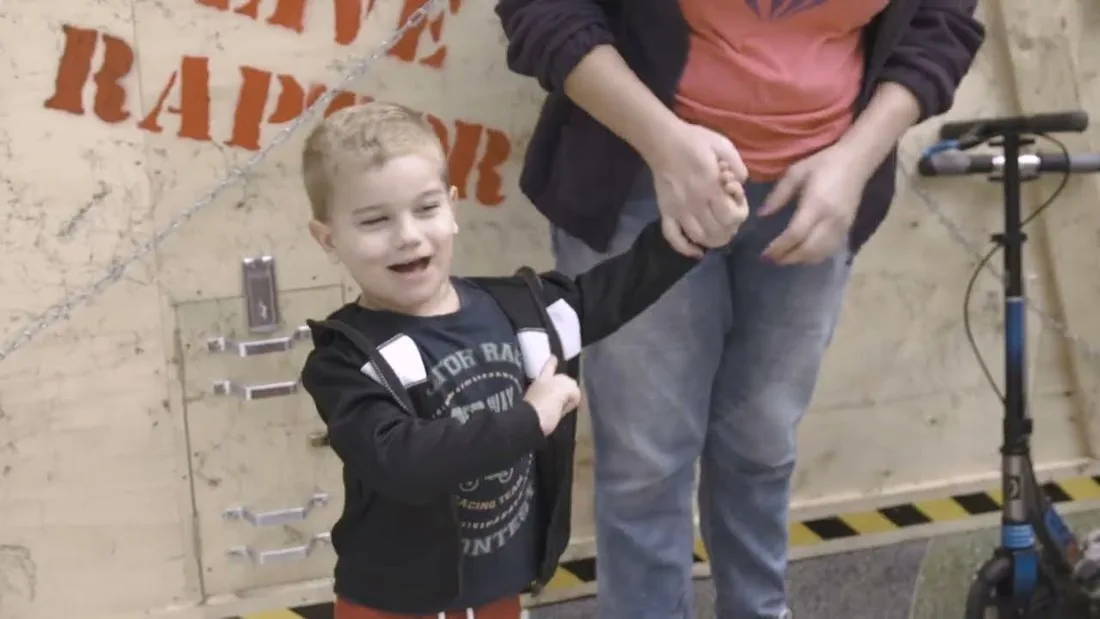
Benji the Allosaurus — the sensory crate families queued for at ParkLake.
Watch Benji the Allosaurus → · The case study on IQads → · Benji's move to Dino Parc →
Immochan / Ceetrus — a programme across a whole centre group
For Immochan — now Ceetrus, the retail real-estate arm of Auchan — we ran an entire participation programme across their shopping centres rather than a single campaign: the 10LaCumpărături campaigns, Arcade, Back to School, community platforms, and Drumul Taberelor, a card game built around a neighbourhood and mirrored for Coresi Brașov. Gamifying not just a store, but the places around it.
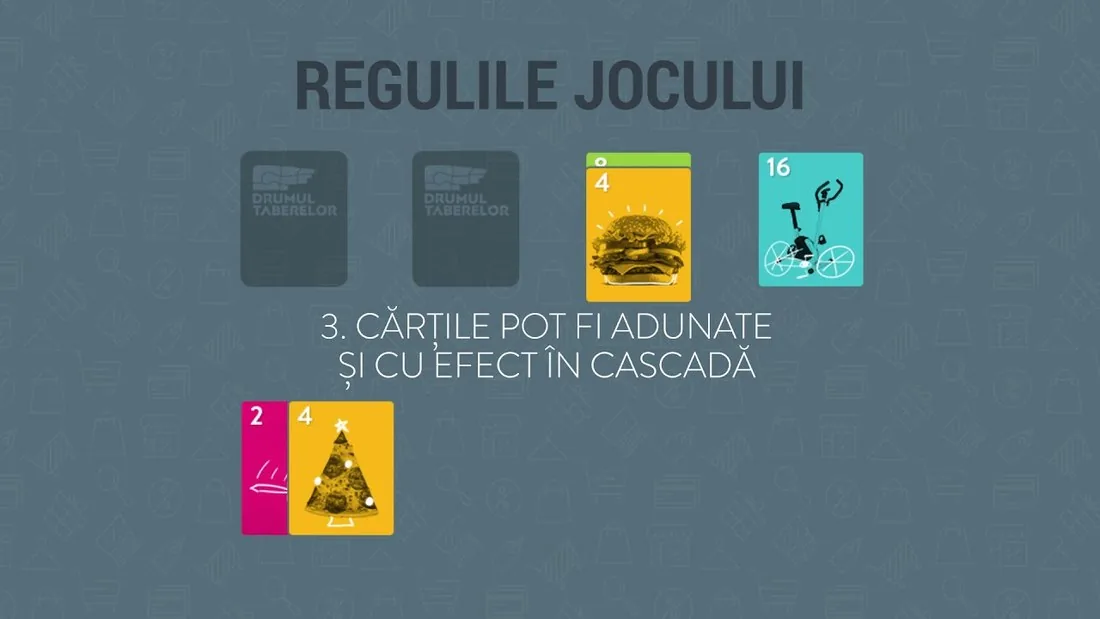
Drumul Taberelor — a card game built around a neighbourhood and its centre.
Lay's — VR free kick in the atrium
A VR free-kick experience deployed as an in-mall activation with In Touch Media: physical motion turned into branded gameplay, in the middle of the walkway.
Carrefour in the mall — Shop Like a Jedi and the collectibles
Inside mall hypermarkets we ran the work that earned the shelf its awards: Shop Like a Jedi, a giant Kinect wall where shoppers moved products with a gesture (Cannes Lions and Eurobest shortlists, three Golden Drum Silvers, an Effie Bronze); Cards Collectables, which turned receipts into collections worth returning for; and the Rubbiz loyalty world extended into a large-scale in-store AR and BTL experience.
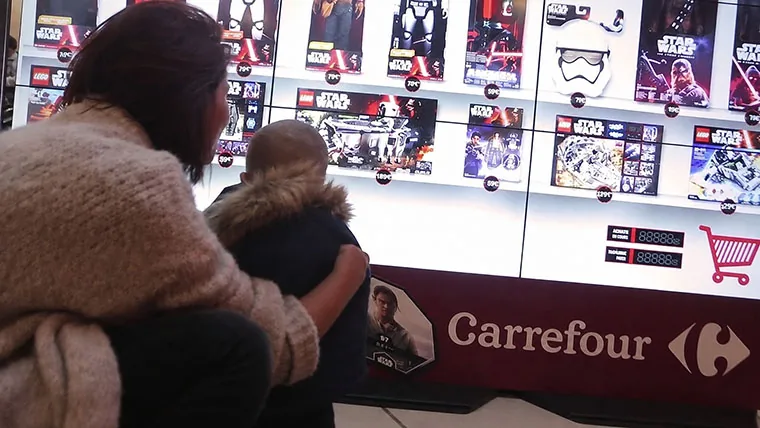
Shop Like a Jedi — products move at a gesture, in the aisle.
Watch Shop Like a Jedi → · Watch Cards Collectables → · Read the full Carrefour case study → · The national record, on IQads →
Huawei — an AR launch stand
For the Huawei Watch launch with Oxygen PR, a Kinect-driven AR stand turned the product reveal into play — an in-store format that works just as well in a mall atrium.
The QR layer — the connective tissue
An installation creates the moment. QR is what turns that moment into a system: it links the atrium to the stores, the visitor to a profile, and every interaction to a number you can report. It needs no app install and works on every phone in the building.
The mechanics we use
Receipt to prize — the visitor scans a code, validates a receipt and enters the draw; participation maps directly to tenant revenue.
Mall passport — scan in a set of stores to collect stamps and unlock a reward. This is the mechanic that moves footfall to chosen tenants, and the one centre managers ask for most.
Instant win and vouchers — a scan returns a discount code redeemable on the spot at a tenant, turning a walk-past into a purchase.
AR without installing anything — the code opens a web AR experience in the browser: no app store, no friction, no lost visitors.
Crowd screen — visitors send a message or a photo by QR and it appears on the atrium screen, moderated in real time. The screen becomes the reason to stop.
Take it home — the photobooth portrait or the video clip of the interaction is delivered to the phone by QR, ready to post.
Leaderboard and return visits — because the scan ties a score to a person, week two has a reason to exist. Repeat visits are the whole point of a mall programme.
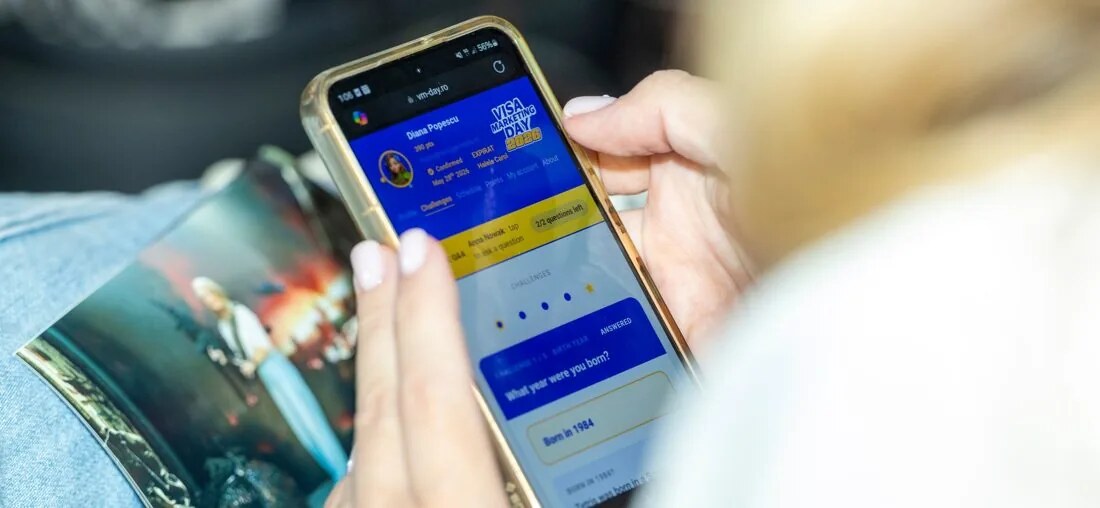
Visa Marketing Day — the passport, already run
We have already run this exact mechanic. For Visa, every guest became a player: a personal avatar, daily challenges in the run-up, then seven location-based QR experiences on the day — all feeding a live leaderboard on the main stage. A mall passport is the same system, tuned to a shopping centre instead of an event floor.
What we can deploy next
Everything above is built. These are the pieces we can install in a centre on short notice.
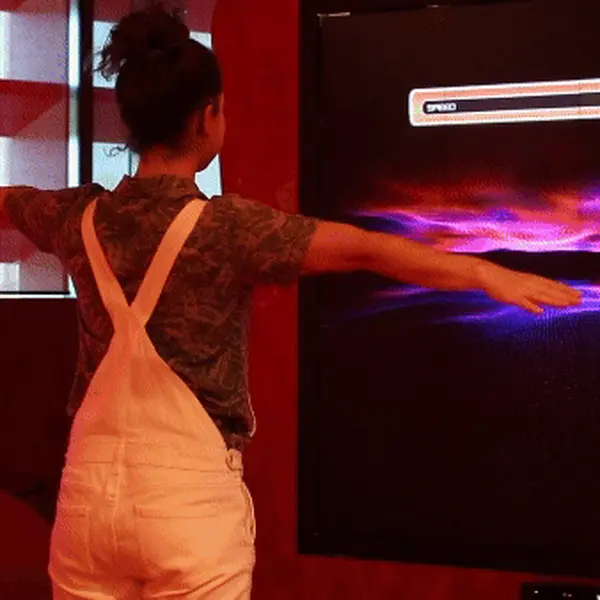
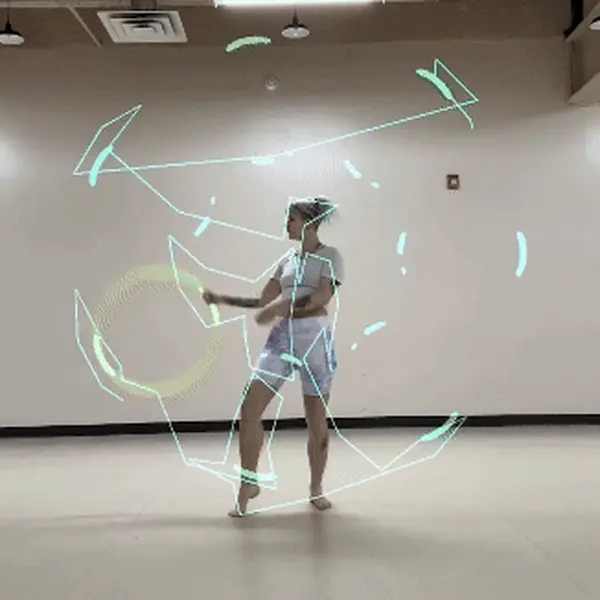
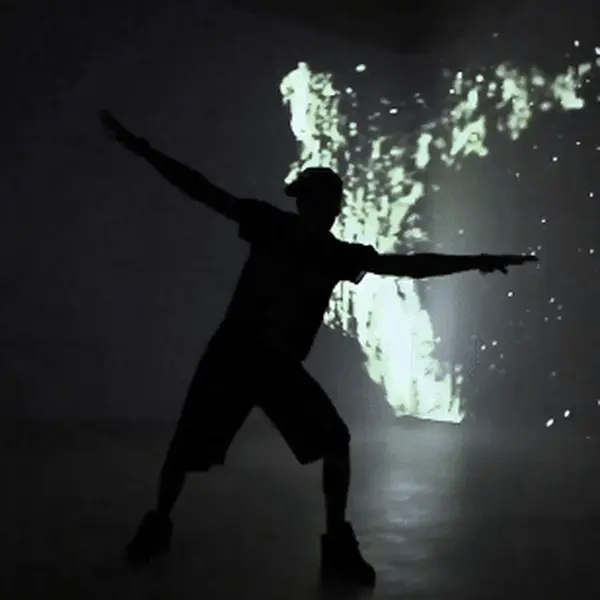
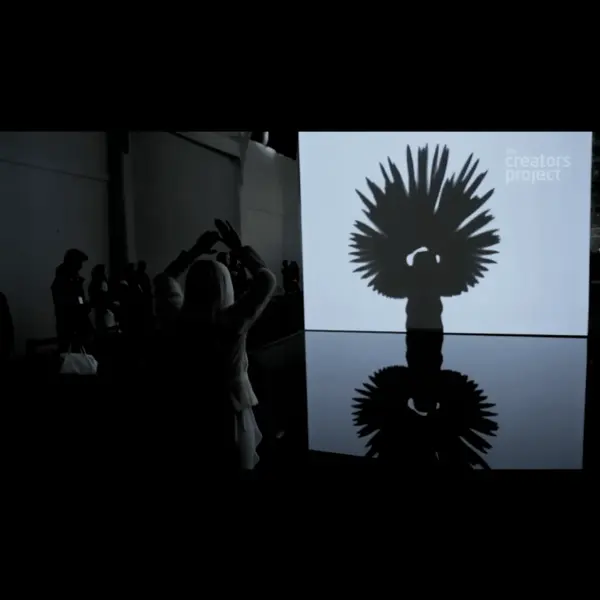
Interactive walls
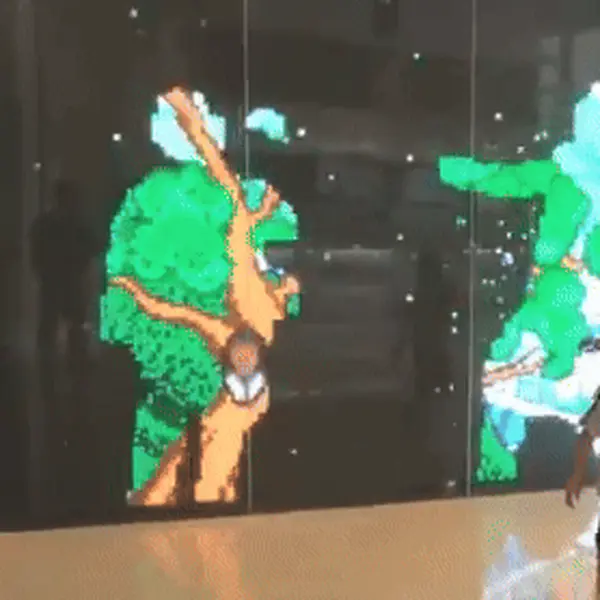
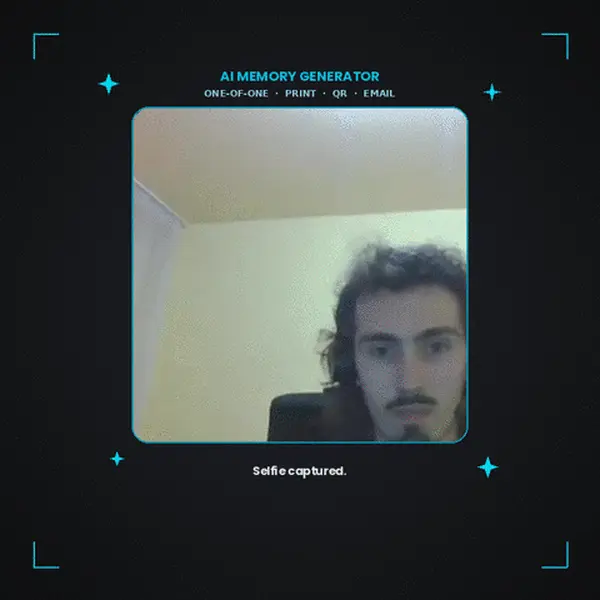
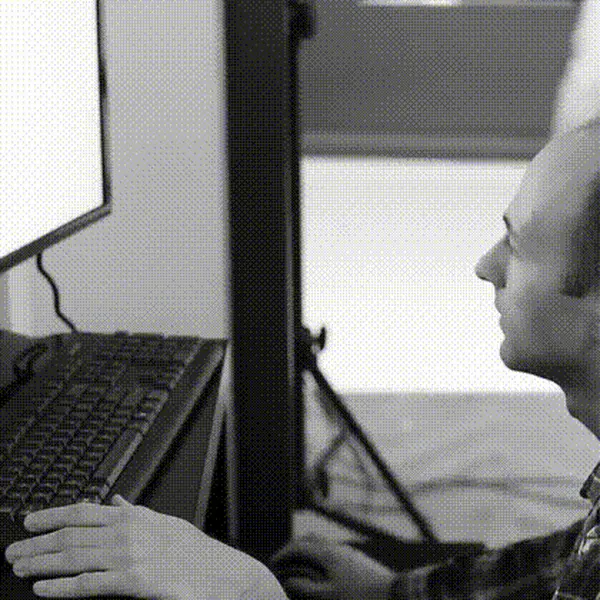
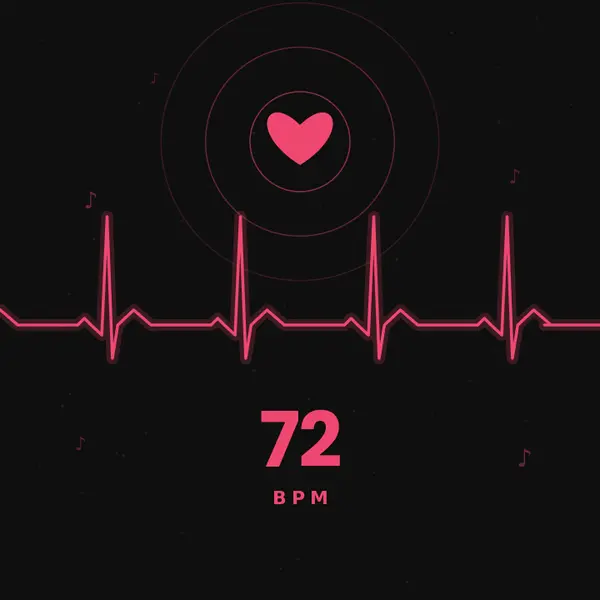
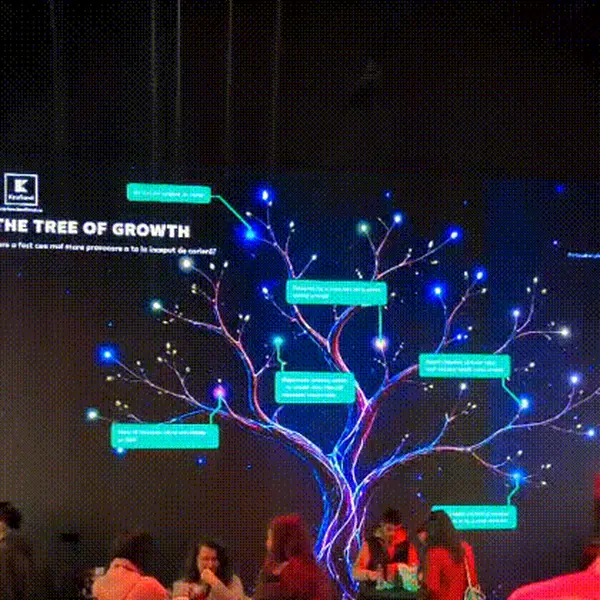
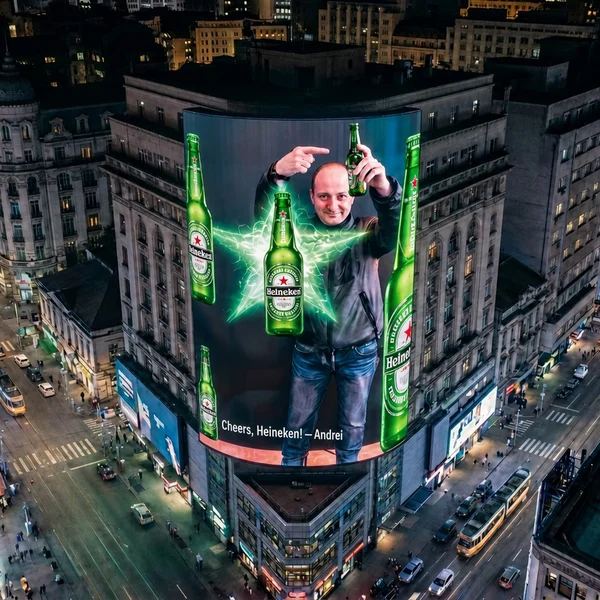
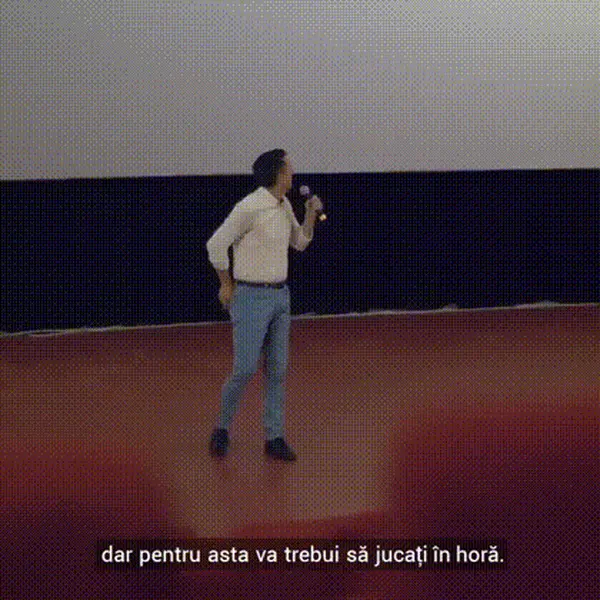
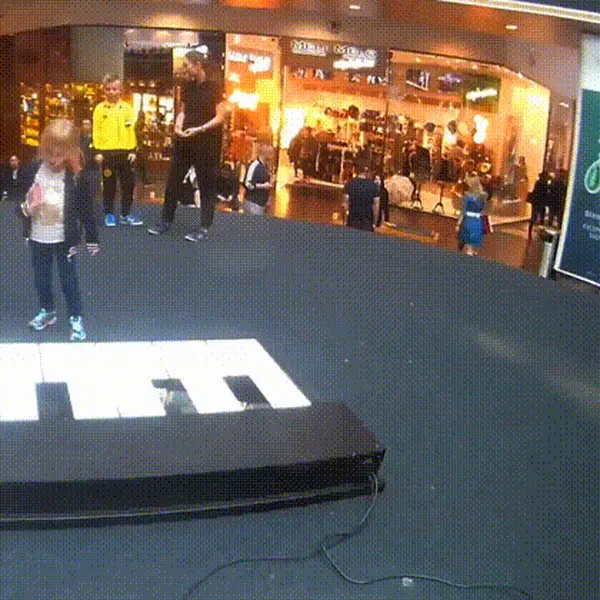
A library of 20 production-ready sensor-driven experiences across personal, collective and ambient modes — Tree of Growth, Live Crowd Wall, Cinema Wall, Sound Floor, AI Photobooth, Signature Wall, Sound of Heartbeat and more. Over 100 installations delivered, typically deployed in 5 to 10 days. Individual experiences run from €1,000 to €4,000, depending on the wall, the hardware it needs and how long it stays on the floor.





A tablet fleet for the floor
Eighteen tablets, delivered configured and kiosk-ready, for quizzes, registrations, surveys, lead capture and prize desks — the unglamorous layer that makes a centre-wide mechanic actually run.
Seasonal and kids formats
Christmas cabins, Back to School, Easter hunts, kids zones and sensory storytelling boxes in the Benji model — the calendar moments a centre already plans for, built as something people queue for.
How a mall programme is built
We build the rails once and reuse them. QR validation, the prize engine, avatars, leaderboards and the operator console are the same system season after season, so the second campaign launches faster and costs less than the first — and starts from an audience that already knows how to play.
Then we operate it live. Drops, difficulty, prize frequency and content are tuned during the campaign, not set once at launch. That operating discipline is what separates a programme that runs for years from an activation that is forgotten by the second weekend.
What we measure
Scans per zone and per tenant, dwell time, repeat visits, receipts validated, prize redemption rate, content shared, and traffic attributed to specific stores. A mall activation you cannot measure is decoration — and the passport mechanic in particular gives the centre a defensible number to show its tenants.
What it costs
Indicative starting points for a single shopping centre. The final number depends on how long the activation runs, the size of the centre and how much content is custom — but this is the band most mall activations land in.
QR activation
A branded web mechanic — mall passport, receipt-to-prize or instant-win vouchers — with the prize engine, operator console and live reporting. Nothing to install in the centre, so it can go live quickly.
Tablet activation
Everything in the QR tier plus a configured tablet fleet on the floor: quizzes, registrations, surveys and a prize desk, in kiosk mode, delivered and set up by us.
Interactive installation
One production-ready experience from our 20-experience library — Tree of Growth, AI Photobooth, Cinema Wall, Sound Floor and others — including install, calibration, an on-site technical operator and QR delivery of photos or clips.
Full centre programme
An installation in the atrium, the QR passport running across tenants, tablets on the floor, seasonal content, daily live-ops tuning and a full reporting pack for the centre and its tenants.
Prices exclude VAT. Multi-week runs and multi-centre programmes are quoted at better rates, since the same rails are reused from one campaign to the next. Equipment can also be rented separately.
FAQ
Do visitors need to install an app?
No. The QR mechanics open in the phone browser, including the AR experiences. No app store, no friction.
How fast can a mall activation be deployed?
Interactive installations are typically deployed in 5 to 10 days. QR-based mechanics can go live faster, since they need no hardware on the floor.
Can it drive traffic to specific tenants?
Yes. The mall passport requires scans in a chosen set of stores, so the centre decides which tenants the mechanic sends people to.
Does this work across a whole centre group?
Yes — we ran a multi-centre participation programme for Immochan / Ceetrus, reusing the same rails across their shopping centres.